A Simple Way to Teach Piano Scales (Without Overwhelming Your Students)
piano fingering, 5 note scale pattern, scale progression list
Teaching piano scales can feel like a balancing act—especially with young beginners. On one hand, scales are essential for technique, ear training, and long-term musical growth. On the other hand, it’s easy for scale work to become confusing, dry, or disconnected from what students are actually playing.
If you’ve ever wondered when to introduce scales, how to explain whole steps and half steps, or how to keep scale learning developmentally appropriate, you’re not alone.
That’s exactly why I created a free piano scale teaching resource designed to support both students and teachers—from the very first five-finger patterns all the way to more advanced scale work.
What’s Inside the Free Piano Scales PDF
This free download includes three practical tools that work together to build understanding and give teachers a clear plan.
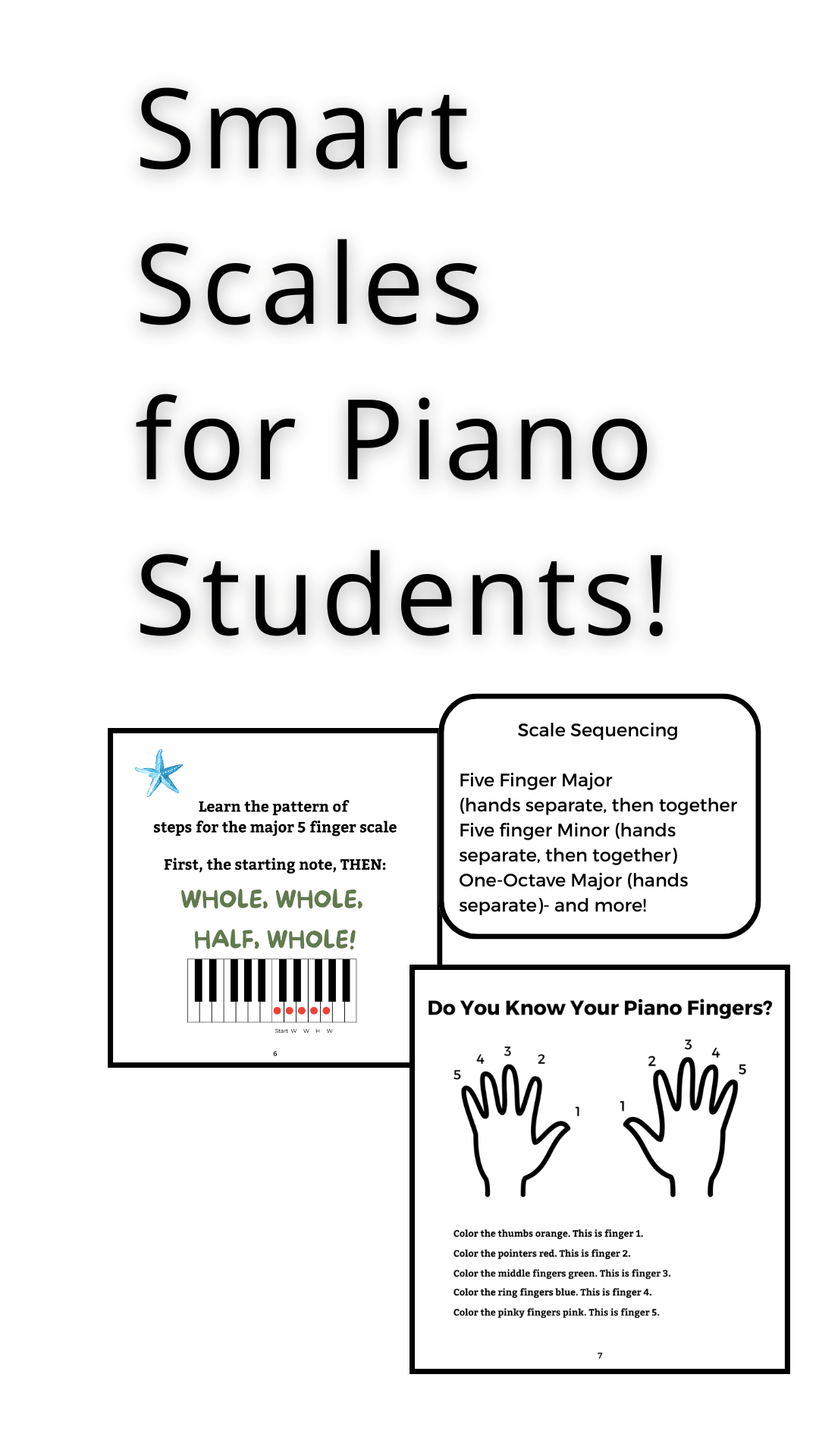
1. Piano Finger Coloring Page
Young students learn best when multiple senses are involved. This coloring page introduces piano finger numbers in a calm, approachable way and works well for:
Beginners ages 5–8
Pre-readers and early readers
Students who benefit from off-bench reinforcement
It’s a great warm-up activity, lesson closer, or take-home sheet that reinforces finger numbers without pressure.
2. Whole Step & Half Step Guide for Five-Finger Major Scales
Understanding whole steps and half steps is the foundation of scale learning—but explaining it clearly to young students can be tricky.
This one-page guide visually breaks down the whole step / half step pattern for five-finger major scales, giving teachers an easy way to:
Introduce scale structure
Connect theory to the keyboard
Prepare students for future major and minor scales
It works beautifully alongside any scale book or method—no specific curriculum required.
3. Scale Progression Chart (Beginner to Advanced)
One of the biggest challenges teachers face is knowing how scales should progress over time.
This planning chart helps you zoom out and see the big picture:
How scale concepts evolve from beginner through advanced levels
When five-finger patterns fit into the larger scale journey
How to pace scale instruction across months or years
Whether you teach one student or manage an entire studio, this chart gives you clarity without locking you into a rigid system.
Who This Freebie Is For
Piano teachers working with ages 5–15
Teachers who want structure without overwhelm
Studios teaching mixed levels at the same time
Anyone looking for clear, student-friendly scale instruction
It’s especially helpful if you’re building confidence with scale teaching or want a more intentional plan for introducing technique concepts.
A Thoughtful First Step in Scale Learning
This free resource isn’t meant to replace your scale books or teaching style. Instead, it supports what you’re already doing by:
Clarifying concepts
Strengthening foundations
Helping you plan ahead with confidence
If piano scales have ever felt like a “someday” topic or something you introduce later than you’d like, this freebie gives you a simple, approachable place to start.
👉 Download the free piano scales resource-
Use it in your next lesson! And let me know how it goes.