My Solution for a Wiggly 6-Year-Old (and a No-Practice Piano Lesson That Actually Worked)
If you’re looking for a no-practice piano lesson that actually works for wiggly kids, this simple hopscotch game might become your new favorite backup plan.
If you teach piano long enough, you know this lesson well.
The student arrives full of energy.
Practice didn’t happen.
Sitting still is clearly not an option.
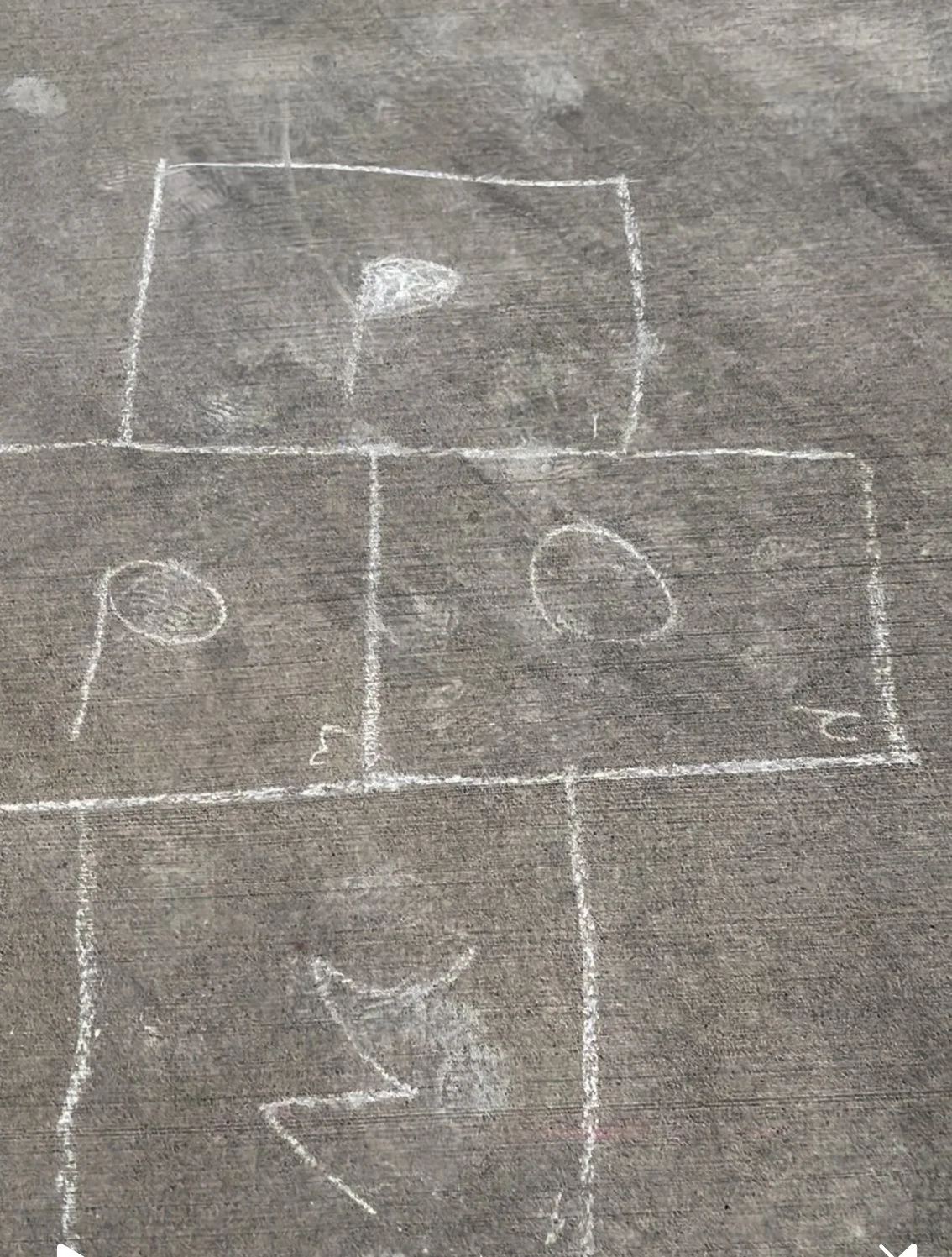
Instead of forcing the piano bench, or nagging about counting out loud, this week I grabbed chalk and headed to my driveway.
And honestly?
It turned into a very productive activity. Not to mention her dad saw us as he came to pick her up. He was duly impressed!
A Simple Piano Hopscotch Game for Wiggly Students
I drew a hopscotch grid on the driveway and filled each square with something musical:
a simple note
a rest
or a piano key
Here’s how we played:
The student grabbed a small rock from my flower bed
She jumped across the hopscotch
Jumped back to the beginning
Before picking up the rock, she had to name the musical symbol it landed on
That’s it.
No lecture.
No reminders about practice.
Just movement, focus, and real learning.
Why This Works (Especially on No-Practice Days)
This kind of activity is a game-changer when practice hasn’t happened — and let’s be honest, that’s a regular part of teaching kids.
Here’s what this hopscotch lesson did:
✔️ Gave her body a way to move
✔️ Reinforced piano key recognition and symbols
✔️ Turned excess energy into focus
✔️ Built confidence instead of shame
When students are wiggly, it’s rarely because they don’t care.
It’s usually because their bodies need to be involved.
That’s when it’s time to change our piano lesson activity.
This Is the Kind of Teaching We Don’t Talk About Enough
Most piano teachers weren’t trained for no-practice lessons.
We were trained to:
correct mistakes
follow method books
move on to the next piece
But real studios need backup plans.
They need movement-based lessons.
They need more creative piano teaching.
They need ideas that say, “Okay, time to pivot to teaching piano without practice !”
Where These No-Practice Ideas Live: The Piano Expedition
This hopscotch game?
It’s exactly the kind of idea that lives inside The Piano Expedition.
The Piano Expedition isn’t about buying more music.
It’s about learning how to teach when things don’t go perfectly.
Inside, teachers find:
🎹 No-practice lesson ideas
🦘 Movement-based activities for wiggly students
🎲 Games that reinforce skills without worksheets
🎵 piano teaching ideas for kids
🧭 A framework so you’re not scrambling every week
🧑🏫 interaction with other teachers - so you don’t feel so isolated
Instead of panicking when a student hasn’t practiced, you’ll know exactly what to do.
And you’ll still walk away feeling like the lesson mattered, the student is happy, and you were a SUCCESS.
You Can Teach Well — Even on the Hard Days
Not every lesson will be polished.
Not every student will practice.
And not every win happens at the piano bench.
Sometimes, it happens on the driveway — with chalk, a rock, and a kid who finally feels successful.
👉 Want more ideas like this?
Explore The Piano Expedition and see how a simple framework can support every kind of lesson — including the messy, wiggly, no-practice ones.
You don’t need more resources.
You need better ways to use them.
And I’d love to help. 💛
FAQs:
Q: What do you do when a piano student hasn’t practiced?
A: Use movement-based games that reinforce musical concepts without relying on repertoire. Activities like hopscotch games keep learning productive and positive.
Q: Are movement piano lessons effective for beginners?
A: Yes. Movement helps young students focus, remember concepts, and stay engaged—especially on no-practice days.