Finger Number Games for Beginner Piano: 4 Off-Bench Activities That Work
I've started a new group of beginners this summer.
And within the first few lessons — finger numbers.
I told one six-year-old we were going to learn our piano finger numbers. He lit up immediately.
"Oh, I already know that! 1, 2, 3, 4, 5, 6, 7, 8, 9, and 10!" — pointing confidently at each finger as he counted.
I pulled out my finger number graphic. The one where thumb = 1, pinky = 5.
He looked at it. Paused.
"Oh. I didn't know that."
And there it is.
Why Beginner Piano Students Struggle with Finger Numbers
Kids don't not know their finger numbers. They know them — just in the way that made sense before piano came along.
So they "sort of" get it during the lesson. But by the following week? They're mixing up 4 and 2. Pointing to their thumb when you call out five. Guessing — and guessing with total confidence.
More explaining doesn't fix it. More doing does.
Off-bench activities create the kind of repetition that actually sticks — because it doesn't feel like repetition.
Here are four games I've been using this summer.
4 Finger Number Games for Beginner Piano Students
1. The Ring Game
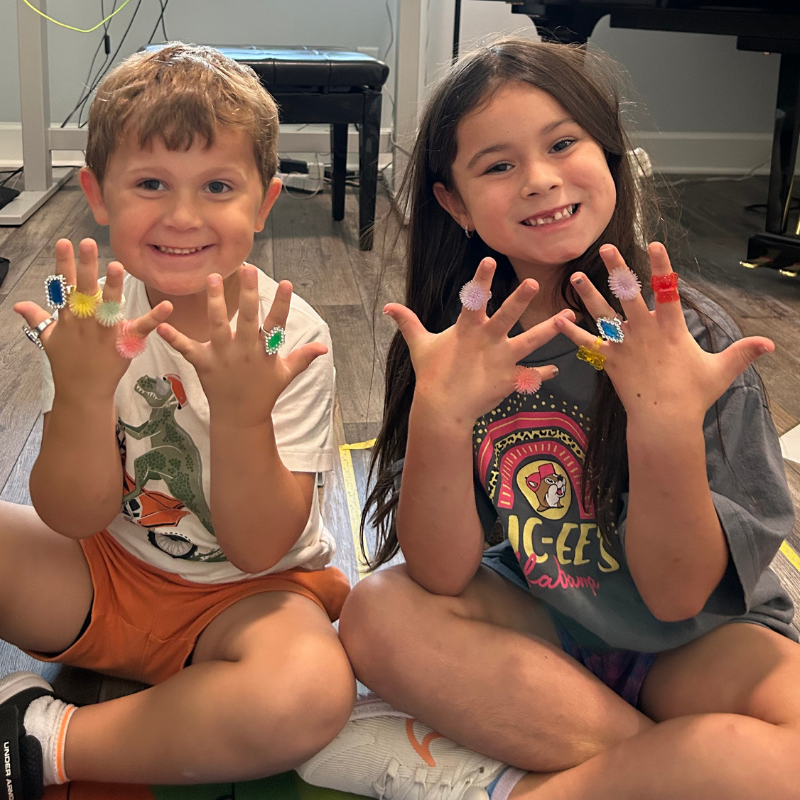
What you need: A small set of plastic toy rings (dollar bin or party favor bag). Finger number flashcards.
The student draws a flashcard, finds that finger, and slides a ring onto it. Goal: get all five fingers on one hand covered.
Simple. But watch what happens — they start checking themselves before they put the ring on. They're thinking about their fingers in a new way.
You can use store-bought flashcards or a printable set. Either works.
2. The Secretary Game
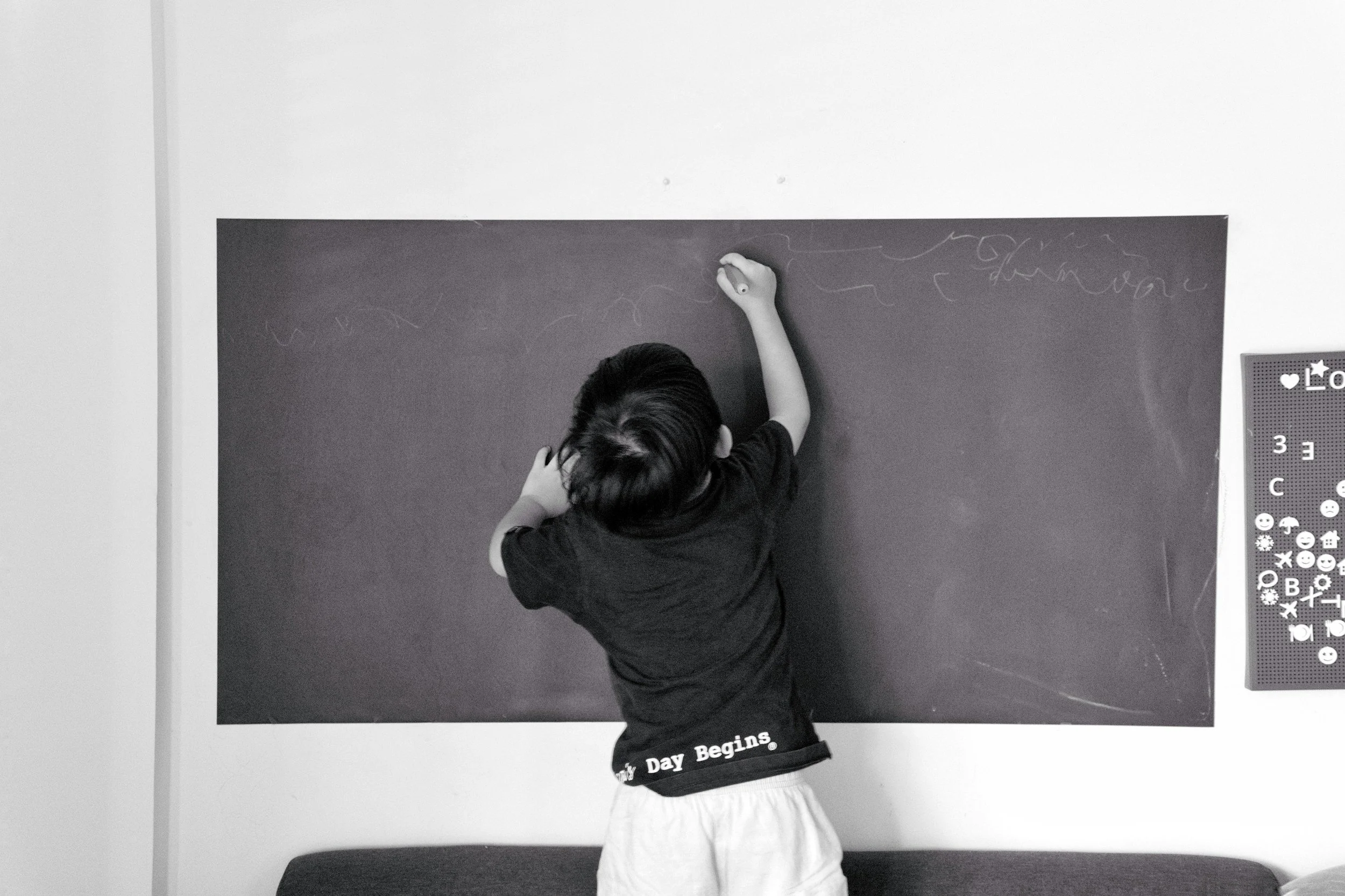
What you need: A marker board or a piece of paper and a pencil. Or a chalkboard with chalk.
You sit at the piano. The student becomes the secretary.
Play one key with a specific finger. The student watches — and writes the finger number down.
With older or more advanced beginners, play a short sequence: fingers 3, 1, 2. They record the whole sequence in order.
This one flips the usual dynamic — and that shift alone makes them pay attention differently. They're not waiting for their turn at the piano. They're working.
3. Trace Your Hands
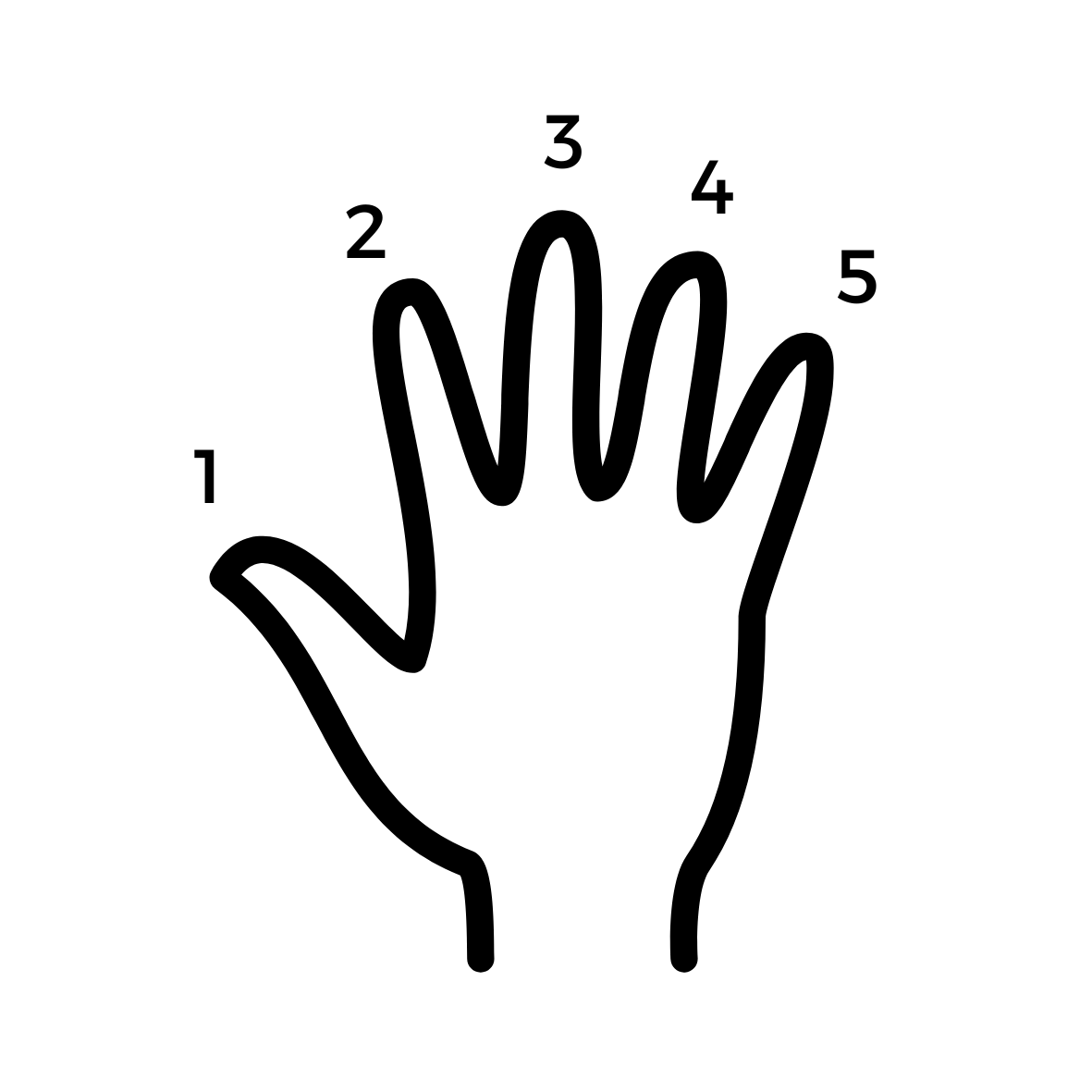
What you need: A blank sheet of paper, a pencil or marker.
Trace around the student's hand. They label each finger with its number.
Repeat with the other hand.
This one is slower — and that's the point. Writing the number next to their own traced finger creates a visual and physical connection that's hard to get any other way.
You'd be surprised how often they pause before they write the five. That pause? That's the learning.
4. The Toy Car Race

What you need: A toy car, a strip of masking tape on the floor.
Car at one end. Call out a finger number. The student finds that finger and uses it to push the car to the other end.
Repeat. Switch hands. Race the teacher.
Pure joy. And sneaky repetition — they're identifying finger numbers over and over without realizing it.
How These Games Work Together
Most of these activities use flashcards or a die to call out the finger number. Quick tip: if you use a die, set a simple rule upfront — roll a 6, roll again. Done.
The real magic isn't in any single game. It's in the variety.
Same skill. Different materials, different movement, different energy. By the time a student has pushed a toy car with finger 3, traced finger 3, and written finger 3 as your secretary... they know finger 3.
That's what meaningful repetition looks like — when it doesn't feel like repetition at all.

Like These? I Have 10 More — And They're Completely Different
These four games are yours to keep — no download required. Try them this week with whatever you have on hand.
But if you want a ready-to-go printable collection with even more variety, I put together 10 Finger Number Games for Beginner Piano Students. Ten completely different games — step-by-step instructions, a teaching tips page, and a studio license included.
Activities include Marshmallow Press, Pom-Pom Color Sequence, Bubble Wrap Pop, Penny Race, Domino Topple, and more. All using materials you probably already have.
That's 14 finger number games total. Enough variety to keep even the most easily-bored beginner engaged — for a long time.
👉 Grab the printable collection here →
Want a free resource?
Many teachers download this set of piano key worksheets EVERY WEEK! Grab yours here:

Ready for Loads of Ideas and Support?
Let me know how YOU use finger numbers in your studio!