Why I Don't Teach Counting Right Away in Beginning Piano
Have you ever asked a student to count out loud while they play? They look down at the music, hesitate for a moment, and finally say, "It's too hard. I can just play it."
If you've taught for very long, you already know what happens next. You encourage them, count with them, and try again. They whisper a few numbers, rush the whole note, skip over the half note, and before long, both of you are feeling frustrated.
I've learned that this little tug-of-war isn't usually about stubbornness. Most beginning students aren't refusing to count because they don't want to. They're trying to juggle finger numbers, note names, hand position, rhythm, and a dozen other new ideas all at once. Counting out loud simply becomes one thing too many.
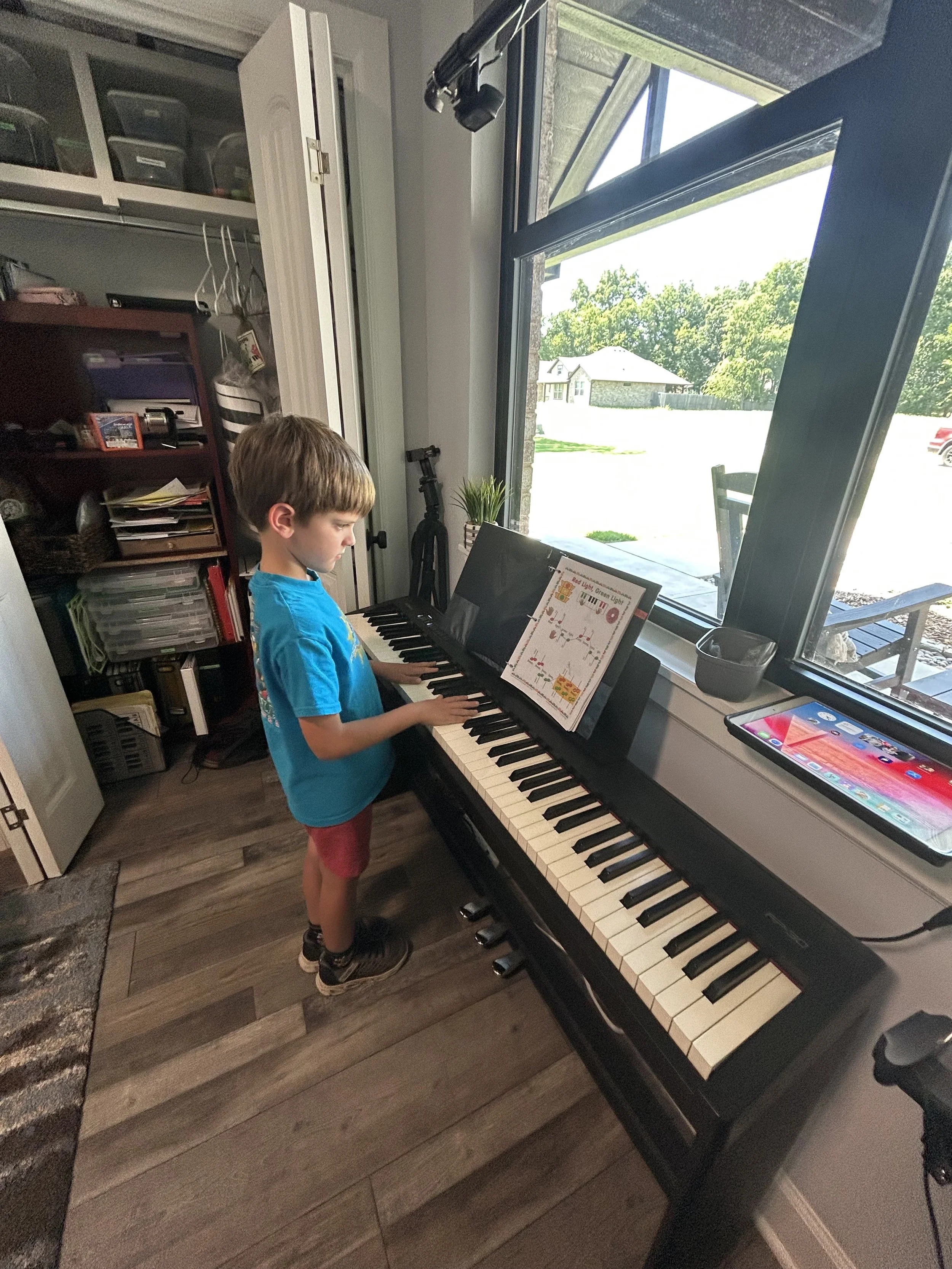
A few weeks ago, one of my piano moms asked me a question after her son's lesson.
"Isn't it confusing? He's learning finger numbers right now. Isn't it confusing to also ask him to count with numbers?"
I smiled because years ago, I finally admitted the very same thing to myself. Maybe we were asking beginning students to count before they really understood rhythm.
Why Counting Isn't the First Goal for Beginning Piano Students
Don't misunderstand me—I absolutely want my students to count. Counting is an important skill, and eventually every student needs to become comfortable doing it.
But I've come to believe that counting isn't the first goal. Before children can confidently count, they need to develop an internal sense of steady beat and rhythm. Inside The Piano Expedition, I spend quite a bit of time talking about this progression because it influences almost everything we do with young beginners.
Think about what we're asking when we introduce a whole note. We want students to hold it for four steady beats. When we introduce a half note, we want them to feel two beats without rushing. Yet many beginners don't really experience those long sounds. They simply know they're supposed to say some numbers while they play.
I Finally Had to Face Reality
Years ago, I noticed that something wasn't working in my own teaching. No matter how many times I reminded students to count aloud, many of them weren't developing a better understanding of rhythm.
Instead, they hurried through the numbers just as quickly as they hurried through the notes. Some students even became less confident because they were so worried about saying the "right" numbers while remembering everything else that beginning piano requires.
One of the things we sometimes forget is just how much we're asking six- and seven-year-olds to process during a lesson. Finger numbers, note names, posture, hand shape, dynamics, rhythm, and now verbal counting—all at the same time. That's a heavy cognitive load for a young beginner.
A Workshop Changed My Thinking
Several years ago, I attended a workshop with the brilliant Keith Snell, co-author of Piano Town. During the session, he shared something his mother, respected pedagogue Carolyn Snell, had taught him about introducing rhythm.
Instead of immediately asking students to count with numbers, she encouraged them to say the names of the notes.
"Quarter... quarter... quarter... quarter."
"Haaaaalf note... haaaaalf note."
"Whole-note-hold-it."
The idea immediately resonated with me because the words themselves were teaching the music. Students weren't just producing sounds—they were reinforcing vocabulary while experiencing the length of each note. Here’s a video with some of my younger students in action:
Why Teaching Note Value Names Before Counting Helps Beginners
Using the note value names accomplishes several things at once. Students remember what the notes are called, and the word quarter naturally prepares them for eighth notes because they're already hearing subdivision in the language itself.
Is this system perfect? Of course not. Some students still need movement activities, and others respond better to Kodály rhythm syllables for a while. Every child learns differently.
Some kids just need reassurance. Saying ANYTHING out loud while playing uses two parts of their brain. This is harder, but makes them smarter. Just knowing that helps a student feel ready to try.
What I have noticed, though, is that many beginning students feel less intimidated when they start experiencing the rhythm this way. Instead of trying to force numbers into music that doesn't yet make sense to them, they're able to experience rhythm in a way that feels much more natural.
When Should Beginning Piano Students Learn to Count With Numbers?
Later, when counting actually has meaning.
Once students understand steady beat, experience long and short sounds, and begin learning about meter and time signatures, numerical counting becomes much easier to understand. The numbers now describe something they've already experienced instead of introducing another abstract concept.
Teaching Music Like a Language
One idea has shaped my teaching more than almost anything else: music is a language. Children don't begin by studying grammar. They listen, imitate, speak, and understand before anyone asks them to analyze the rules.
I think rhythm deserves the same sequence. Before I ask beginning students to count with numbers, I want them to hear rhythm, move rhythm, speak rhythm, and truly experience rhythm. When the numbers finally arrive, they make sense because they're connected to understanding instead of memorization.
I'd love to hear how you approach this in your own studio. Do you begin with numbers, rhythm syllables, note names, or another strategy that's worked well for your students?
If you're teaching children ages 4-8, you'll probably enjoy The Piano Expedition, where I share the exact progression I use to teach rhythm, reading, technique, and musicianship to young beginners.
Frequently Asked Questions
Should beginning piano students count out loud?
Many teachers encourage counting from the first lessons, but some beginners benefit from learning steady beat and rhythm first. Once students understand note values and feel the beat internally, counting becomes much easier.
How do you teach rhythm before counting?
Movement, body percussion, rhythm syllables, chanting note names, and listening activities all help students internalize rhythm before numerical counting.
When should piano students learn to count?
Every student develops differently, but I introduce numerical counting once students understand steady beat, note values, and basic meter.