🎹 How to Teach Half Notes: A Simple Rhythm Fix That Actually Works
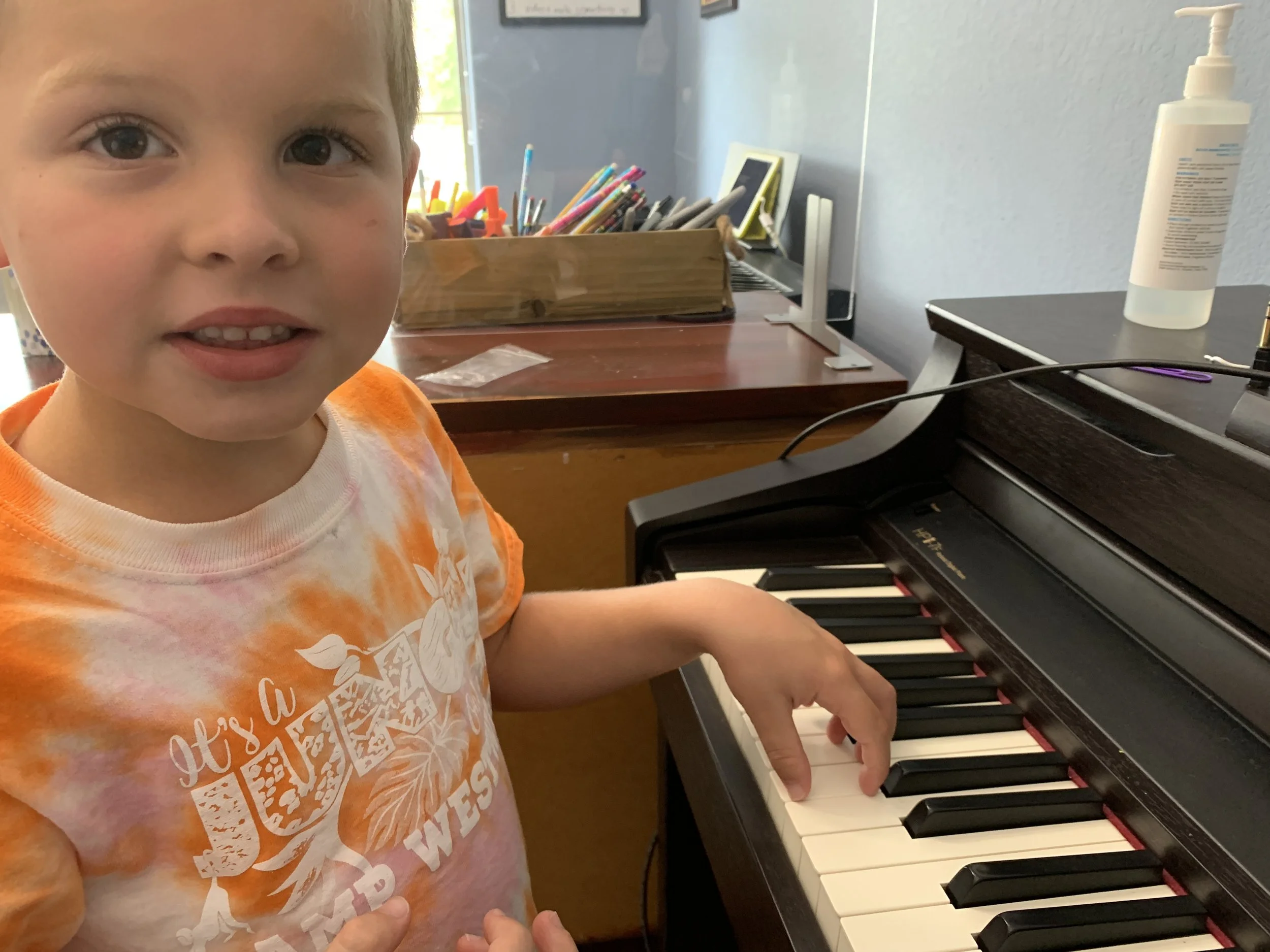
If you’ve ever wondered how to teach half notes in a way that actually sticks, this playful rhythm activity helps piano students feel the beat and understand rhythm from the inside out.
It happens to the best of us.
That student who forgets to hold the half note for two full beats.
You remind them. You count with them. You even say, “Remember, the half note gets two beats!”
…and still, the moment they start playing, poof — the second beat disappears.
If this sounds familiar, you’re not alone. Teaching rhythm to beginners can feel like you’re saying the same thing on repeat. But sometimes, the fix isn’t in more words — it’s in how we help them feel the beat.
🎶 Step Away From the Lecture
When a student plays a half note too short, our instinct is to stop and explain:
“That note is worth two beats. Let’s count together — one, two.”
But for young beginners, counting out loud can be more of a mental exercise than a musical one. They’re trying to remember finger numbers, find keys, and keep a steady pulse — all at once.
Instead of piling on another layer of instructions, try something more playful and sensory.
🖐 Try This Simple Piano Rhythm Activity
Here’s what I love to do:
Step 1: Have your student play a simple repeating rhythm pattern — maybe tapping one key or clapping a steady beat. I use a simple ostinato with dominant and tonic with quarter notes. (See the YouTube video below).
Step 2: You play the melody while they keep the beat.
Step 3: Let them hear where the half note lands and feel how long it lasts.
This approach takes the focus off counting and puts it back on sound and movement — two things kids naturally respond to.
It’s a short activity (less than 30 seconds), but it builds a deeper understanding of rhythm than a verbal reminder ever could.
💡 Why This Works
Kids learn rhythm best when they experience it in their bodies.
When they hear the melody sustain while their own hands keep the pulse, the concept of “two beats” suddenly makes sense.
They’re not just memorizing a definition — they’re internalizing the feeling of time and space in music.
📌 Save This for Your Next Lesson
Next time your student forgets to hold the half note, skip the lecture.
Instead, guide them through this rhythm activity and watch their understanding click.
It’s quick, musical, and fun — the way piano lessons should be.
🌟 More Creative Piano Teaching Ideas
If you enjoy teaching through experience and play, you’ll love The Piano Expedition — my community for piano teachers who want to bring curiosity and creativity back to their studios.
We meet monthly on Zoom, explore new teaching frameworks, and share ideas that make piano lessons come alive for beginners.
👉 Learn more and join The Piano Expedition here.
❓ FAQ: Teaching Half Notes in Piano Lessons
1. How do you teach half notes to beginners?
Start by letting students feel the rhythm instead of memorizing it. Use clapping, tapping, or playing a steady pulse while you demonstrate the melody. When they experience how long two beats feel, they’re more likely to remember it when playing.
2. What’s a fun rhythm activity for piano lessons?
Partner rhythm games are fantastic! Let one student play a steady beat while another plays the melody. You can also switch roles. This encourages listening, coordination, and teamwork — all while reinforcing rhythm naturally.
3. Why do students struggle with half notes?
Many beginners think in motion — they’re focused on “what’s next” instead of “what’s now.” Holding a note feels like doing nothing, but musically it’s full of energy and sound. Teaching them to listen for sustained sound helps bridge that gap.
4. What age should students start learning note values?
Even preschoolers can begin exploring rhythm! Start with movement-based activities — walking, clapping, and echo patterns. Formal note reading comes later, but rhythmic awareness begins the moment they start feeling the beat.
5. How can piano teachers make rhythm more fun?
Incorporate movement, instruments (like rhythm sticks or shakers), and games that connect rhythm to story or emotion. Keep it active and playful, and your students will start to internalize rhythm without even realizing it.