How to Teach Steady Beat Piano (Before Introducing Duets)
Learning how to teach steady beat piano is one of the most important steps in preparing beginner students for duet and ensemble playing.
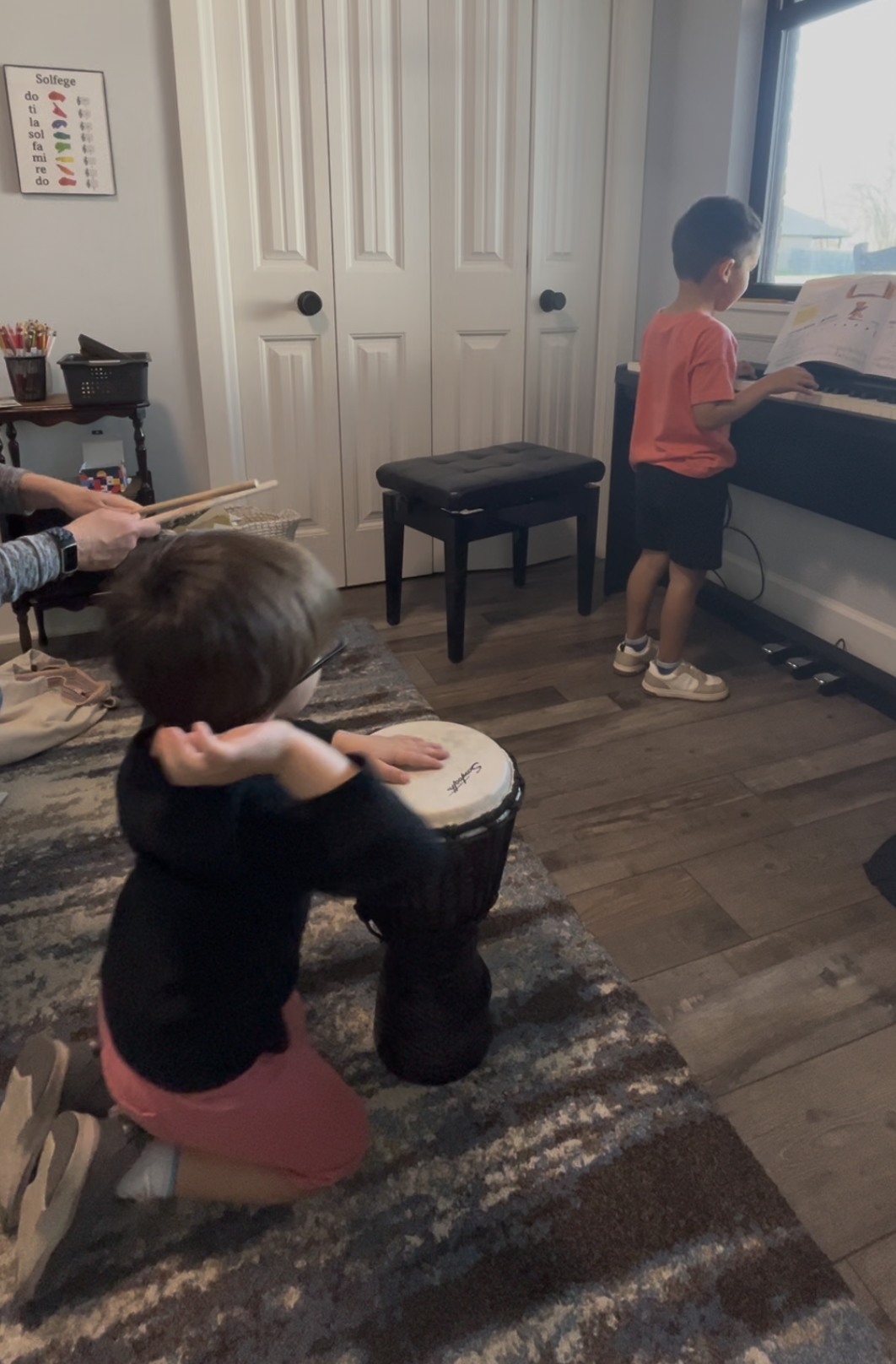
Trying to stay together!
If your students rush, stop, or fall apart when playing with a partner…
The problem usually isn’t the duet.
👉 It’s the steady beat.
🎯 Why Piano Duets Often Don’t Work (At First)
Many piano teachers are excited to introduce duets early—and for good reason. Playing with a partner builds listening skills, confidence, and musical joy.
But here’s what often happens:
Students speed up or slow down
They stop when the accompaniment begins
They struggle to listen while playing
And sometimes… they look at you like:
👉 “What are you playing?”
If you’ve experienced this, you’re not alone.
🎵 A Real Lesson Breakthrough
I had a student who really wanted to play Für Elise.
I could tell right away—not because he told me, but because every time he sat at the piano, he tried to play it… completely out of time, but full of determination.
So instead of telling him NO, I said:
👉 “Let’s play a duet together first.”
I created something simple—focused on steady beat and listening.
Before long, he performed successfully at his school talent show—confident, happy, and proud.
🎯 The Hidden Problem: Students Aren’t Ready Yet
Here’s what I’ve learned:
👉 Most students are not physically or aurally prepared for duets.
And sometimes, we unintentionally reinforce the problem.
As teachers (especially if we accompany well), we tend to follow the student:
If they rush, we rush
If they skip, we skip
So the student becomes the soloist… and we become the accompanist.
That’s not ensemble playing.
🥁 Step 1: Teach Steady Beat Off the Bench
One of the most effective ways to teach steady beat to piano students is to begin away from the piano.
And here’s something surprising:
👉 Clapping is actually one of the hardest skills for beginners.
Instead, use this progression:
✔️ Patsching (hands on legs)
Builds a grounded, internal sense of pulse
✔️ Left–Right Patterns on legs
Develops coordination and consistency
✔️ Clapping
Now students are ready for more complex coordination
✔️ Marching
Adds full-body movement and reinforces internal timing
This sequence helps students feel the beat before they try to play it.
🎹 Step 2: Transfer Steady Beat to the Piano
Once students feel the beat in their bodies, we bring it to the keyboard using simple, pattern-based parts.
Think in three layers:
🎵 Bass (low register)
Long notes - tonic and dominant or do and sol
Simple and steady
Accessible for beginners, parents, or siblings
🎵 Middle (ostinato patterns)
Repeating rhythms - using open fifths and following harmony
“Tick-tock” motion, left/right using open fifths
Supports harmony without overwhelm
🎵 Melody (upper register)
The main tune
Played higher on the piano
This approach allows:
👉 Multiple students at one piano
👉 Immediate success
👉 A true ensemble experience
There are variations on this. Here is an example of a Christmas tune: (my husband plays the low part, I play the middle and upper parts. My husband is not a pianist!)
✍️ Step 3: Create Your Own Beginner Piano Ensemble
You don’t need complicated arrangements.
You can create your own ensemble in three simple steps:
Teach the melody (rote, pre-reading, or simple notation)
Add a bass line (based on harmony, using simple patterns)
Create a middle part (open fifths or repeating rhythms)
It may not follow every traditional harmony rule—and that’s okay.
👉 The goal is to train ensemble skills, not create a perfect arrangement.
👀 Step 4: Use Visual and Aural Cues
Students need to learn how to start and stay together.
Visual cues:
“Watch me” signals. Play on the keys and have them watch your hand (music pattern memorized) and follow.
Student leaders- same as above.
Student or Teacher Conducts.
Aural cues:
Counting off in tempo
Rhythm sticks or drums
A simple breath before starting
learning to start and stop together
These cues help students internalize timing and coordination. Here’s a cute video - where we work on starting and stopping with four year olds!
💛 What Happens When You Teach This Way
When steady beat is taught first, everything changes.
Students become:
✨ Confident
✨ Independent
✨ Able to listen and respond
✨ Joyful ensemble players
Duets stop feeling stressful—and start becoming meaningful musical experiences.
🎁 Try This in Your Piano Lessons
If you’d like to try this approach in your studio, I’ve created a simple duet designed for beginners.
It helps students:
feel steady beat
play predictable patterns
succeed in ensemble playing
👉 Download the free duet here:
If you want a FREE Video that walks you through all of this - check out the video below!
❓ FAQ
How do you teach steady beat in piano lessons?
Start with movement activities like patsching, clapping, and marching before transferring the beat to simple piano patterns.
Why can’t my piano students play duets together?
Most students struggle because they haven’t developed steady beat or listening skills before attempting ensemble playing.
What is the best way to introduce piano duets to beginners?
Use simple, pattern-based parts (bass, middle, melody) and teach steady beat first through movement and repetition.
At what level should piano students start duets?
Students can begin early if the music is simplified and they are prepared with steady beat and basic coordination skills.