What Real Progress Looks Like in Beginner Piano Lessons
Beginner piano lessons don’t always look the way we expect—especially when teaching young students ages 5–10.
I want to tell you about a boy.
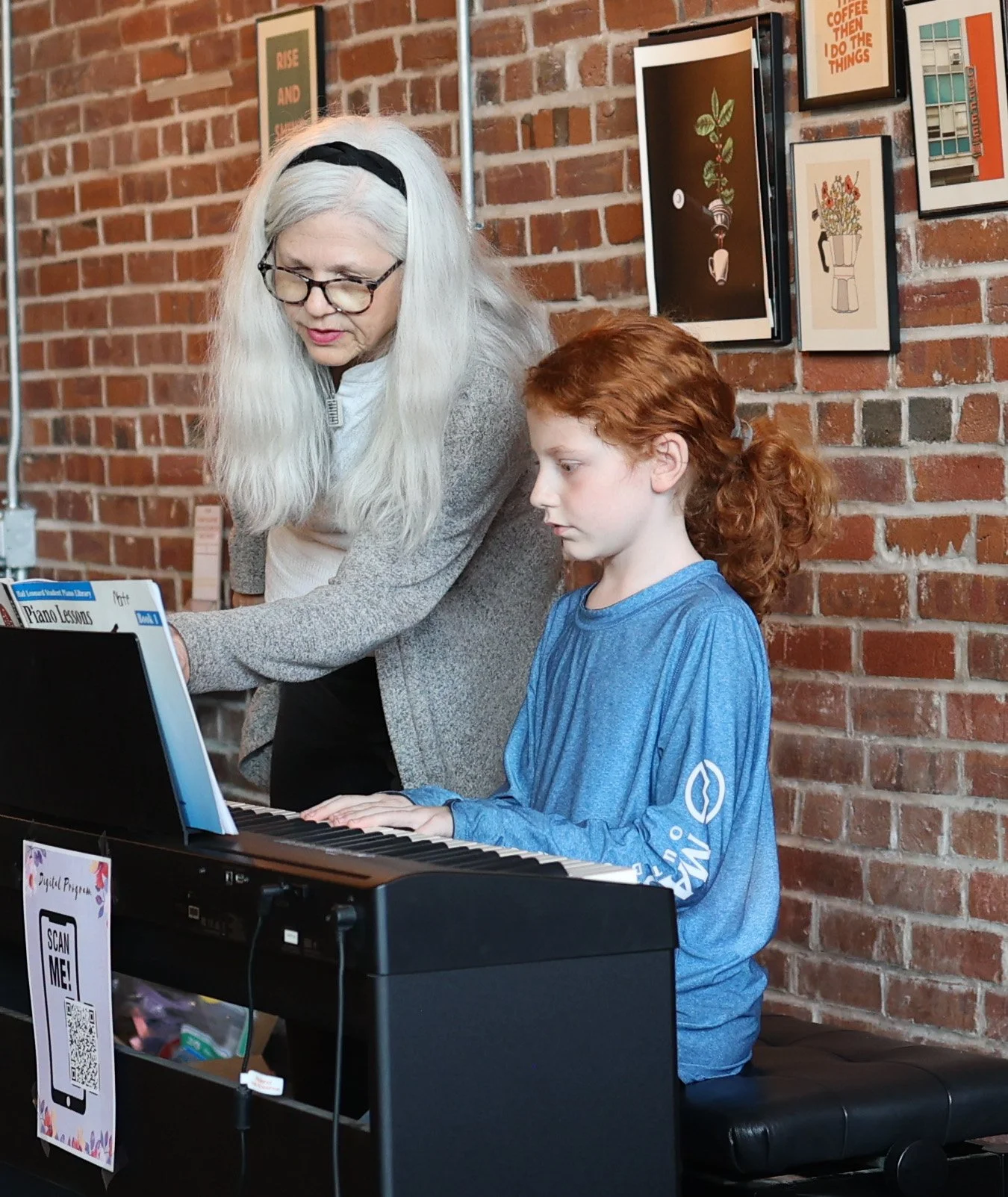
Nine year old boy getting set to nail his first piano solo at recital!
He started beginner piano lessons in November. Nine years old. Full of energy — and not exactly what you'd call "consistent."
He missed some lessons. Lost his book. More than once. Last week — broke his iPad. (That's the device he uses for Piano Maestro to check his piano homework. Gone.)
And yet.
Last weekend, he walked into a recital — in front of his whole family — and played a duet with me. Then turned around and played a solo.
Six months in. Holiday interruptions. Bad weather cancellations. A missing book. A broken iPad.
And there he was.
What Six Months of Piano Lessons Actually Looks Like
We have this idea — as piano teachers — of what progress is supposed to look like.
Consistent practice. Books that come out of the bag for home practice. Steady forward movement, week after week.
And sometimes it does look like that. But a lot of the time — especially with young beginners — it looks a lot more like this boy.
Here's what I want you to notice.
In those six months, this kid learned to read notes in middle C position. He counts like a champ — I mean, really counts. Rhythm is not a mystery to him. And just recently, he was joined at his lesson by a piano partner — another nine-year-old boy. Now they play duets together. They push each other. They show off for each other. It's the best thing.
His family came out to support him at the recital. They could not have been more pleased.
I looked at that moment and thought — this is the whole thing right here.
Why Piano Teachers Need to Count the Messy Wins
If you teach young beginners — especially kids ages 5 to 10 — you know that the path is rarely straight.
There will be students who forget to practice. Students who lose their assignment sheet. Students who show up distracted, or tired, or completely uninterested in sitting on a bench for 30 minutes.
And it's easy — especially this time of year, when spring fever is real and the end of the school year feels both close and far away — to look at your roster and wonder: Are they actually getting anywhere? Am I doing enough?
Here's what I've learned after 40 years of teaching piano to children:
Progress in beginner piano lessons is rarely linear. But it's almost always happening.
The Moment That Changes How You See Your Students
There's a particular kind of moment that piano teachers live for — and it almost never happens at home practice.
It happens at a recital, when a child who has been "struggling" walks up to that bench with something you've never seen before: confidence.
It happens when a reluctant student asks to play the piece again — not because you asked them to, but because they wanted to.
It happens when two kids who started as strangers sit side by side at the keyboard and make music together.
These are the moments that remind us why we do this.
Not the perfectly executed scale. Not the flawless recital run-through. The messy, real, showing up anyway moments.
What I Count as a Win in My Piano Studio
After years of teaching beginner piano students, here's my list:
They came back after a hard lesson
They played something — anything — at home this week
They made eye contact with the audience at the recital
They asked a question about music on their own
They got excited about a new piece
They taught their little sibling a song
They showed up
Lost the book. Broke the iPad. Showed up anyway.
I count all of this as wins. Every single one.
You should too.
A Note for Piano Teachers Who Are Tired Right Now
If you're heading into the final stretch of your studio year feeling like you could have done more — taught better, planned more carefully, been more consistent — I want you to hear this:
Your students are further along than you think.
The work you do with young beginners doesn't always show up on the surface. It goes deep. It builds slowly. And then one day — sometimes six months in, sometimes two years in — it shows up all at once, in a recital, in a duet, in a moment you didn't plan for.
That's the job. And you're doing it.
Frequently Asked Questions
What should beginner piano students learn in the first six months?
Depending on age, most beginner piano students learn note reading in middle C position, basic rhythm, steady beat, and simple performance skills. Younger students may stay with pre-reading books during this time, reading notes off the staff and building foundations.
How do you measure progress in piano lessons for kids?
Progress isn’t always linear. Look for consistency, confidence, musical understanding, and willingness to participate—not just perfect playing.
Why do some beginner piano students seem inconsistent?
Young students often deal with distractions, missed practice, and life interruptions. Even so, meaningful progress is still happening over time.
Kay Lowry is a nationally certified piano teacher with 40+ years of experience teaching beginner piano to children. She creates low-prep teaching resources for piano teachers at Piano Music for Kids.